Translate

October 26, 2015

Doctors: Where the money is

by Alex Fok

HarbourTimes.comToday, 18:38

The argument over public sector doctor salary increases is complex – but HT simplifies it for you. Learn why, this row will erupt time and time again until a formal mechanism is put in place.

On Wednesday October 21, over 1,300 public-sector doctors gathered at the main lobby of Queen Elizabeth Hospital to stage a mass sit-in for an additional 3% pay rise, on top of the original 5% (with slight variations depending on staff levels) on offer, to put them in line with civil servants. From 5% to 8% – who’s right and who’s wrong in this dispute?

Participating in the protest included some of the most prominent doctors in the city, namely renowned microbiologist and recently resigned University of Hong Kong Council member Professor Yuen Kwok-yung (袁國勇) and President of Hong Kong College of Anaesthesiologists Council Dr John Liu Tak-chiu (廖德昭), as well as heads of Hong Kong Public Doctors’ Association, the Hong Kong Medical Association, the Hong Kong Academy of Medicine, the Hong Kong Doctors Union, Frontline Doctors Union, and Médecins Inspirés.

Every six years…

The established system works like this:

The HA does not have its own salary adjustment mechanism. It has been following that for the civil servants, namely the net pay trend indicators (PTIs) derived from the annual pay trend survey (PTS). So, if the survey determines, for example, if civil servants get a 5% pay raise, then doctors, by custom (not a legal mechanism), would receive the same 5% raise. In effect, doctors pay increases or decreases were linked to those in the overall economy.

On this occasion, the 3% additional pay rise, however, was derived from the Pay Level Survey (PLS) conducted every six years. So civil servants receive, every six years, a pay adjustment based on the PLS, in addition to their annual pay adjustment (the PTI).

However, there is no precedent of the HA following the PLS. The first PLS in 2006 recommended no changes to salary levels after a period of economic downturn (dotcom/9-11 crash, then SARS). Doctors were not clamouring to have the PLS adjustment at that time. Doctors now are clear – they want the extra pay based on the PLS: an extra 3% on top of their annual adjustment of 5%.

The doctors claim the convention is to follow the civil servants, regardless of whatever the mechanism is. Given the PLS recommended raise was zero in 2006, it’s unclear if it was followed or not – no one cared.

The Government: Hands off

The Hong Kong Government, while urging the HA to take into consideration the morale of its staff and the attractiveness of the remuneration package, stated it would not allocate additional resources for this particular case. The Government’s position is that the HA is an independent body and the Government will not step in to dictate employment terms like salary.

“As the Hospital Authority is a statutory authority responsible for the provision of public medical and hospital services, it can determine the salary level of its employees according to its assessment…the Government will not allocate additional resources for this particular exercise. So the HA has to demonstrate that in the long run, it has the ability to sustain and absorb the recurrent expenses arising from this particular exercise,” Secretary for Food and Health Ko Wing-man (高永文) stated.

Dr Pierre Chan Pui-yin (陳沛然), chairman of the Hong Kong Public Doctors’ Association, says the HA is like a contractor of the Government, and whether it would like to follow salary adjustments for civil servants – which has been the case for the past 20 years or so – should be its own business.

HA’s ability to pay

The HA said the move would cost it an additional HKD200 million a year. It is currently receiving annual funding of HKD49 billion from the Government, allocated in a one-line vote in LegC of the year 2015-2016. The HA holds some HKD3 billion in reserve on a rolling basis. If the government doesn’t ante up extra cash, then the HA would presumably need to raid this piggy bank.

Just a week prior, the Government announced a HKD570 million plan to retain 60 out of 100 public hospital doctors who will pass their retirement age of 60 in the next two years. The authority treats 90% of local patients but employs only 40% of doctors.

A temporary victory

In wake of the overwhelming discontent, the HA board approved the pay rise for approximately 2,000 or so senior doctors after a board meeting held on the day following the sit-in. The HA’s Finance Committee was tasked with handling the arrangement and is expected to submit a study report to the Board on November 19.

The Hong Kong Public Doctors’ Association issued a statement soon afterward, welcoming the positive response but stressed that the pay rise has to be fully backdated to October 2014, same as civil servants, and that the HA professional salary scale be pegged with equivalent grade in the Government unless a mutually accepted mechanism can be forged in the future.

Dr Leung Ka-lau (梁家騮), who represents the medical sector in the LegCo and is the first public hospital doctor in Hong Kong to be elected as a lawmaker, also backed his colleagues’ call for a ‘fair’ pay adjustment mechanism.

Grumpy

This was not the first time doctors staged protests requesting to be treated in accordance to salary adjustments for civil servants. In December 1, 1991, the HA, a nominally independent body distinct from the Government, was established to take over management responsibilities of all public hospitals along with some 20,000 staff. About 60% of the staff opted to work under HA terms of employment while the rest chose to remain civil servants. New doctors were recruited after 1999 under the HA’s unpopular staff reconstructuring scheme, creating an issue of unequal pay for equal work. In June 2007, about the same number of public sector doctors launched a similar mass sit-in at the same venue. The HA, like this time, eventually backed down after showing initial reluctance to respond to the doctors’ demand.

Eight years have passed and the issue remains unsettled. Dr Louis Shih Tai-cho (史泰祖), president of the Hong Kong Medical Association, says there is a weird status-quo that while salaries of public doctors are officially unpegged from that of civil servants, both the HA Board and the staff recognise an unwritten convention that there is some sort of “point-to-point connection” between the terms.

The nature of the tenuous connection was made explicit when HA staff were asked to follow a 5.38% pay cut for appointed officials and senior civil servants back in 2009.

“Back then [in 2009], public sector doctors were told that they were ‘closely linked’ to their government counterparts. And now, even after the [HA’s] concession, the Government remains sticking to its stance that there is no mechanism to peg the two bodies. I don’t think the doctors would accept that,” Dr Shih says. These contradictory messages – you’re ‘closely linked’/’no you’re not’ – creates confusion, acrimony, and room for debate about how doctors are compensated, with all parties seeking the most favourable terms to their own interests.

Neither ‘public’ nor private

As an alternative option, former Secretary for the Civil Service Wong Wing-ping (王永平) earlier suggested that the salary scale for public hospital doctors should be adjusted with reference to their private counterparts instead.

Dr Chow Pak-chin (周伯展), vice-president of the Hong Kong Medical Association, shares his personal view with Harbour Times on this subject and argues that Wong’s suggestion is infeasible.

“The operation models between public-sector and private-sector doctors are essentially different,” says Dr Chow. He explains that the former have a full team to back them up and have a list of statutory protections, though separated from the civil service system, including annual leave, pensions, gratuity payment, and – very important – insurance, a costly part of private practice. Private sector doctors bear all these costs.

It ain’t the same

Furthermore, private sector doctors in practice don’t have salaries. They charge per visit or procedure. They pay clerical and medical support staff. If they don’t work (i.e. take a holiday), they don’t get paid. They don’t report their incomes to government (other than through their tax returns, presumably off limits to the HA, or via companies who information might not reflect as ‘salary’ if they are paid in tax free dividends).

The identity crisis of public sector doctors will continue so long as the Government refuses to adjust doctor salaries based on private sector salary adjustments. The argument against this methodology is that public sector doctors’ working conditions are fundamentally different to private sector doctors.

Right now, there is no representative of frontline public doctors in the HA’s Board. Ensuring their representation rights within the system could be the first step to solve the dispute and attract more doctors to join and stay in the HA rather than paying the retirees and senior doctors to stay on the job.

Related

http://harbourtimes.com/2015/10/26/doctors-where-the-money-is/

Mystery surrounds object in ferry collision

  • Authorities say  the hull under both engine rooms of Horta was damaged.  Photo: RTHK
    Authorities say the hull under both engine rooms of Horta was damaged. Photo: RTHK
Authorities are yet to determine the mystery object that a high-speed ferry hit near Lantau Island on Sunday evening when it was on its way back to Hong Kong from Macau. 

The accident left 124 people injured, five of them critically. By Monday evening, 91 people have been discharged from hospital. 

Authorities said an inspection on Monday morning showed that the hull under both engine rooms was damaged. 

Officials from the Marine Department inspected the vessel, Horta, after it was towed back to the Cheung Sha Wan dock. 

A department spokeswoman said they found the hull under the two main engine rooms was damaged. 

Shun Tak Group, which owns the company Turbojet, said the engine rooms took on water after the collision. The company said the high-speed ferry passed its yearly inspection in March, and the captain had 27 years of experience in operating the Macau-Hong Kong route.

http://news.rthk.hk/rthk/en/component/k2/1219683-20151026.htm

How CY became a Facebook shooting star

by Ben Kwok

EJ Insight » Hong KongToday, 17:48

CY Leung was briefly on Facebook but if he stayed much longer, he would have been an instant hit if there was a 'dislike button', according to some netizens. Photos: HKEJ, Facebook

It was CY Leung’s first stab at Facebook, but as it turned out, it was not to be.

Just hours after the page went up on Sunday, it was taken down. No word why.

It had a warning that it “may only be visible to an audience you’re not in”. 

On Monday, Andrew Fung, information coordinator for the Office of the Chief Executive, shared a picture of Leung uploaded on a page titled “I support CY Leung”. 

Your guess is as good as mine, but some netizens wondered if Leung’s debut post was politically incorrect or sensitive.

That is, if wearing a “HK Our Home” t-shirt in front of Government House and talking about gardening rise to that level.

Still, some netizens suspected Beijing’s Liaison Office of having had a hand.

Others said it was another “oops” moment for the gaffe-prone Hong Kong leader after realizing he should have used WeChat, China’s Twitter-like messaging service, rather than a social media platform that’s under an indefinite ban in the mainland. 

In fact, Mark Zuckerberg is working on it.

The Facebook co-founder has been in Beijing talking to ordinary citizens and presumably trying to get officials to ease up a little.

On Saturday, he delivered a 22-minute speech to students at the elite Tsinghua University in straight Chinese.

Back in Hong Kong, Leung probably meant his maiden post to herald his reelection campaign two years early.

With his approval rating sinking like a stone, he could use a more folky, less rigid approach.

But Facebook can be a two-edged sword.

It helped topple governments and dictatorships during the Arab Spring uprisings in the Middle East and North Africa in 2010-2011.

While it can help smooth the rough edges for politicians, it can also bring unintended consequences.

Social media has highlighted scandals and personal failings, from US politicians and military leaders to Vatican priests and hhigh-profiel celebrities.

Financial Secretary John Tsang, a potential chief executive candidate, is one of a few social media success stories.

Tsang has racked more than 12,000 followers and more than 3,300 friends since he launched his Facebook page last year.

A photo of him congratulating boxer Rex Tso, simply captioned “well done”, received more than 1,000 likes and 34 shares.

Another shot of him cheering the Hong Kong football team has made the rounds of social media.

Netizens warm to Tsang because they want to see a government official who is human, not a yes-man to Beijing.

Even Eddie Ng, who occupies a lowly spot in public opinion polls, managed to get a bump after posting a photo showing him holding a popular soft drink marked “Eddie” on the can, according to Ming Pao Daily.

Not the Hong Kong police, though.

When the police department debuted on Facebook last month, it was raked with negative comments about the seven officers accused of beating pro-democracy activist Ken Tsang during last year’s street protests.

It did not stop the government from pursuing a social media strategy, with no less than three cabinet secretaries and 12 bureau chiefs tasked with its implementation.

The final nudge for Leung toward social media may have come from his elder daughter Chai-yan, a popular figure on the internet, who famously said her father knows nothing about Facebook.

Apparently Leung, already unpopular with voters, is even less well liked by younger netizens.

One young poster said Leung’s Facebook page would instantly become a hit if there was a “dislike” button.

Another said his first question to him would be how to cook a lobster, referencing Leung’s wife Regina who is often mocked for her fashion sense, especially her penchant for screaming orange and red.    

No word if Legco President  Jasper Tsang, who has had a testy relationship with Leung in recent months, has anything to say — or if he even noticed CY’s short-lived misadventure.

But in a blog post Monday about his meeting with a top Mexican official, Tsang summed it up with a punchy headline, “no reelection“, if he hadn’t meant it to be about someone else.

The Mexican official had told Tsang that by law, the country’s president cannot seek reelection after a six-year term (to prevent dictatorships).

In fact, he said the US president serves only six years counting reelection, spending the fourth year to get reelected and the eighth year as a lame duck.

Without directly mentioning Leung, Tsang turned his post into a homespun tale and many netizens got the idea.

– Contact us at english@hkej.com

BK/JP/RA

http://www.ejinsight.com/20151026-how-cy-became-a-facebook-shooting-star/?utm_source=rss&utm_medium=rss&utm_campaign=20151026-how-cy-became-a-facebook-shooting-star

Chinese Nude Photos in Malaysia Sparks Police Investigation

One Chinese already arrested


Bad Behaviour Abroad

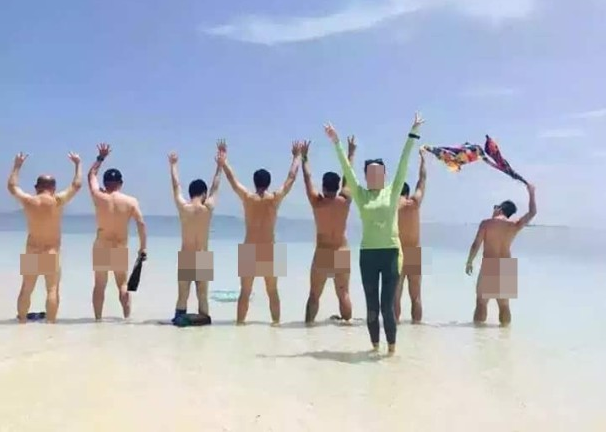
Malaysian police have arrested one Chinese person and are looking for more following complaints of Chinese tourists taking nude photos on the country’s beaches.

Police were first alerted on October 15 at a tourist resort in Sempora, and have gone so far as to contact INTERPOL to help track down those involved, all thought to be foreigners.

One 30 year-old Chinese male has been arrested by police. According to the director of criminal investigations in Sabah, North Borneo, the suspect is a professional diving instructor who regularly travels to Semporna to organize activities for Chinese tourists.

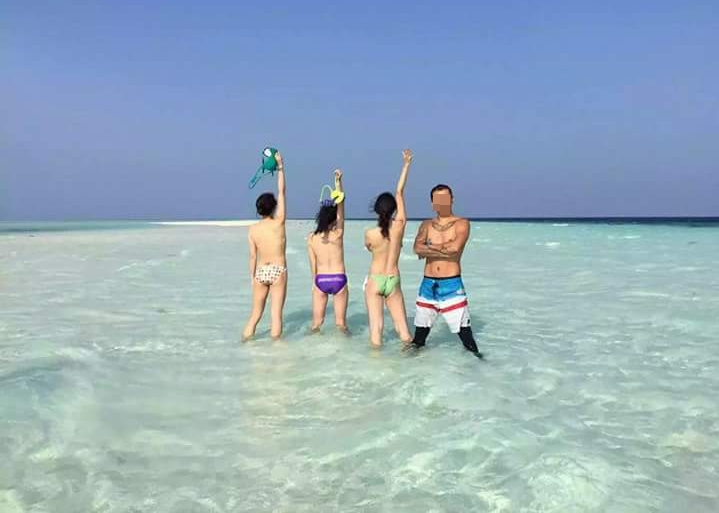
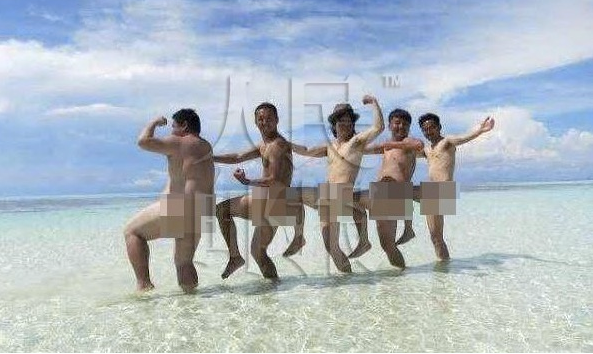
Photos that have been published online show men and women posing together topless or completely nude on the beach. Public nudity is illegal in Malaysia, a devoutly Muslim country where many rules and regulations are derived from Sharia law.

This past June, a group of international tourists were blamed for causing a 6.0 earthquake by superstitious Malaysians after they took a number of nude photographs on top of Mount Kinabalu and faced criminal charges for desecrating a site considered “sacred”. This incident follows other instances of tourists taking nude photos at culturally sensitive areas this summer including Machu Picchu in Peru and Angkor Wat in Cambodia.

Chinese tourists have been known to strip naked while vacationing abroad. This past May, a Hong Kong tourist angered locals in Thailand when shebungee-jumped naked at a Thai tourist resort. Meanwhile, Chinese cultural landmark the Museum Palace claims its cultural legacy and heritage has been damaged after a Chinese photographer took nude pictures at the international tourist attraction.

Malaysia recently waived certain visa requirements for Chinese tourists in an effort to attract more tour groups to the country.

Source: People's Daily OnlineGMW,Daily MailThe TelegraphUSA Today,

Photos: GMW

Tags: chinese touristsMalaysia,Naked Photosnude photo scandal,tourists behaving badly


Charles Liu

The Nanfang's Senior Editor

More stories

https://thenanfang.com/nude-photos-prompt-investigation-chinese-tourists-malaysian-police/

Relax, The PLA Says China Will Not “Recklessly” Use Force In The South China Sea

by Charles Liu

The NanfangToday, 08:33


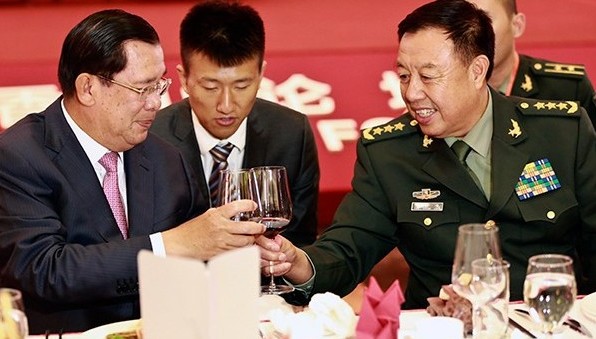
China’s Central Military Commission (CMC) has assured the public that it will not “recklessly” use force in the region amid growing tensions in the area. CMC Vice-Chairman Fan Changlong said China “will never recklessly resort to the use of force,” even on issues regarding sovereignty. Fan made the comments at the Sixth Xiangshan Forum, a semi-official gathering over Asia-Pacific security issues.

Fan went on to explain that China would continue to resolve disputes through friendly consultation, saying the country “has done its utmost to avoid unexpected conflicts”.

The comments come following the construction of two lighthouses in the South China Sea. Construction of the lighthouses has been hotly contested by the Philippines and United States, who argue such land reclamation projects could be used by the Chinese government as military bases.

The Huayang Reef and Chigua Reef constructions, both of which house Chinese garrisons, “will not affect freedom of navigation in the South China Sea,” said Fan, who added that the Chinese lighthouses “have already begun to provide navigation services to all nations.”

Deputy Foreign Minister Liu Zhenmin said China will continue to build other facilities in the area. “Countries alongside the South China Sea and vessels sailing through the waters will receive better service,” said Liu.

As reported in China Daily, other Chinese experts have weighed in on how China could better develop relationships with its regional rivals.

Yan Xuetong, Dean of the Institute of Modern International Relations at Tsinghua University, suggested that “cooperation could even be started when trust is absent” in some parts of the Asia-Pacific region.

“Don’t make the absence of trust an excuse for non-co-operation … We could embark on preventive co-operation first,” he said, referring to a prior agreement to avoid conflicts or accidents from developing between them.

On September 3, China commemorated the 70th anniversary of the end of World War II with a military parade featuring tens of thousands of Chinese soldiers and vehicles. At the time, Chinese President Xi Jinping said, “In the interest of peace, China will remain committed to peaceful development. We Chinese love peace. No matter how much stronger it may become, China will never seek hegemony or expansion.”

On the same day, five Chinese warships were seen in the Bering Strait off the coast of Alaska. According to Pentagon spokesman Captain Jeff Davis, it marked the first time the United States had seen Chinese navy ships in the Bering Sea.

At 2.3 million soldiers, China’s army is the largest in the world but perhaps not for long. During the September 3 parade, President Xi announced plans to reduce the army by some 300,000 soldiers.

The post Relax, The PLA Says China Will Not “Recklessly” Use Force In The South China Sea appeared first on The Nanfang.

https://thenanfang.com/pla-china-will-not-recklessly-use-force-south-china-sea/

Newest Fitness Craze to Hit China: Walking on Your Hands and Feet

by Charles Liu

The NanfangToday, 08:36

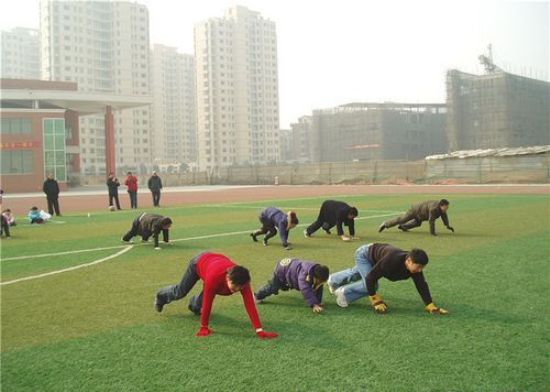
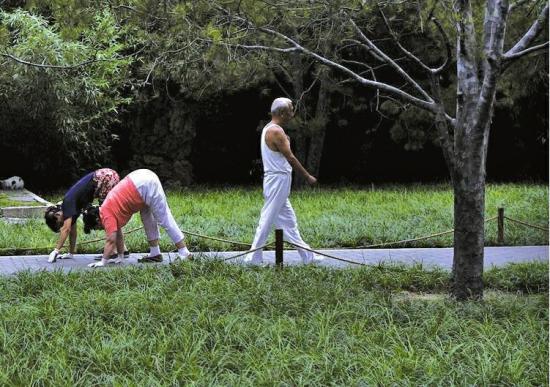
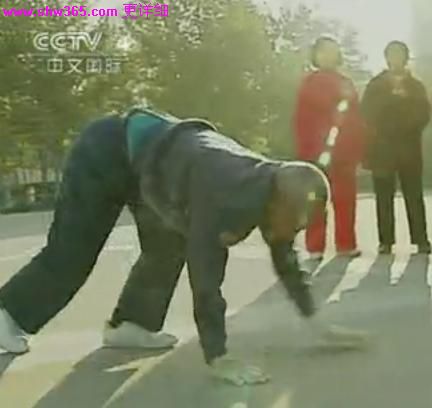
While many practice Tai Chi or square dancing, some elderly Chinese are known to engage in a number of strange physical exercises such as walking backwards or clapping their hands while jogging. However, the newest fitness “craze” to take China by storm takes things a step further as adults crawl on their hands and feet as a way to keep fit.

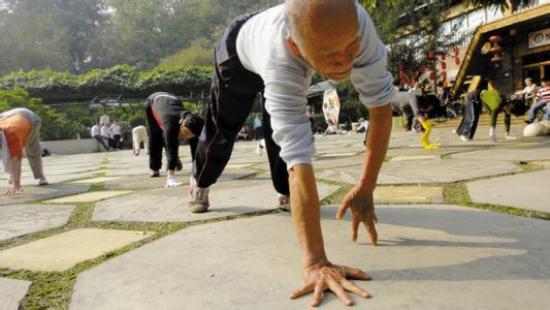
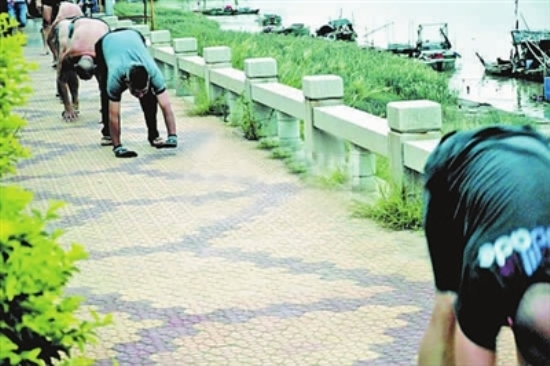
As seen in pictures taken on October 19, walking like an animal on four legs is a morning ritual practiced by some 30 to 40 people daily in a historical park located in a shopping district of Zhejiang, Henan.

The crawlers explained there are a number of health benefits that come from the exercise. One person said, “Crawling like this has cured my cervical spondylosis (a deterioration of the spine related to old age). Making two circuits everyday on this sidewalk has made my body more limber,” while another said, “After crawling for half a year, not only has my neck stopped being so stiff, my blood pressure has dropped!”

Claims that walking on your hands and feet is good for your body are indeed backed up by a medical professional, albeit one in Traditional Chinese Medicine. Deputy Director of the Chinese Traditional Medicine Preventative Treatment Center Lu Peiwan said this exercise is a total body workout that uses muscles that are often under-utilized, thereby improving muscles, ligaments, and bones throughout your body.

Furthermore, Lu said the crawling exercise is rooted in traditional Chinese culture. According to Lu, it originates from famous Han Dynasty doctor Hua Tuo’s “Five-Animal Exercise” in which people can improve their health by copying animal behaviors.

One of the participants explained that although crawling is a recent phenomenon for many of them in Zhengzhou, it has deep roots attached to it:

Among us here, the person who started doing this is a Mr Duan who has been doing this for five or six years now. Mr Duan is now 90 years-old, and is in excellent health. After watching him crawl all day long, we’ve taken after him.

Despite being called “outlandish” by the People’s Daily Online, Chinese have been practicing this tradition for years, just as Mr Duan has been doing. Here’s a photo from back in January 2015:

crawling park exercise

From November last year in Changsha:

crawling park exercise

This one is from September 2012:

crawling park exercise

This one is from April 2011:

crawling park exercise

And this one also from 2011, as seen in a CCTV report:

crawling park exercise

In 2013, the World Health Organization listed China as the country with the 65th highest life expectancy at 75 years. Japan came in first with an average life expectancy of 85.

The post Newest Fitness Craze to Hit China: Walking on Your Hands and Feet appeared first on The Nanfang.

https://thenanfang.com/newest-fitness-craze-hit-china-walking-hands-feet/

China’s Ball of Money Rolls Between Asset Classes

by Christopher Balding

The NanfangToday, 09:22

Here is video of the press conference of the PBOC announcing its rate cut and reserve cut with an explanation of their view of the Chinese economy.

The clear explanation for the IR and RRR cuts is that the Chinese economy is much weaker than what official data reports. In 2014, official real GDP growth was 7.3 percent and is on target to come in at 6.9-7.0 percent for 2015 according to official data.  In less than 12 months the PBOC has cut interest rates six times from 6 percent to 4.35 percent.  In any economy, an annual drop of 0.3 percent is little more than a rounding error or global economy fluctuation. To put this in a different perspective, China has cut interest rates almost 2 percent due to a drop in the GDP growth rate of about 0.3 percent during a period of admittedly slow global growth.  Imagine if every country cut interest rates almost 2 percent for every drop in GDP growth of 0.3 percent.  Most countries have bigger fluctuations than that every year.  To believe the Chinese economy is even close to 7 percent, you must believe they are aggressively cutting rates to bring them back up to 7.5-8 percent.  The Chinese economy is simply not close to 7 percent GDP growth.

There is also no such thing as “weak 6.9 percent” growth. By weak growth people must have some point of reference as to what makes 6.9 percent growth weak.  It is not weak in absolute terms as it would still be one of the strongest rates of growth in the world if true.  It is not weak in relative terms as last years growth was only 0.3 percent higher than this years expected growth.  Even against the past few years, this would represent a slowing of the growth rate by less than 1 percent of GDP growth.  Economic growth numbers measure a discrete value.  By that I mean than 2 percent growth is 100 percent more than 1 percent and that 3 percent is three times 1 percent.  This does not mean that 2 percent is some fuzzy amount more than 1 percent or that 3 percent is different from 1 percent as black is different from white.  People that say Chinese GDP growth is a weak 6.9 percent are really revealing they don’t have the intellectual honesty or courage to say they don’t believe official data.  There is no such thing as a weak 6.9 percent.

As much as the PBOC has been loosening via RRR and IR cuts, this money has largely left via capital outflows. There is definitely some correlation and some causation, but the relationship is undeniable.  It should come as no surprise that capital outflows, while they had been picking up, really gained steam when the PBOC began cutting RRR and IR almost a year ago.  This fits very closely with what we would expect theoretically.  As interest rates decline, capital is going to leave the country.  Unfortunately, the PBOC finds itself in a vicious cycle now.  The more the PBOC cuts RRR and IR, the more capital is going to leave the country.  Just to keep liquidity stable, it is going to have to cut more, and the cycle repeats.  It should come as no surprise that as every half percentage point cut to the RRR releases an additional approximately $100 billion.  Since the PBOC began cutting the RRR by 2.5 percent in total since January or 2 percent excluding the cut on Friday, FX reserves have dropped by approximately $300 billion or roughly 75 percent of the value of released cash. Add in small time lag and we are witnessing essentially 100 percent of RRR cuts leave China.

The regular interest rate cuts are driving China closer everyday to breaking the RMB/$ peg or imposing very strict capital controls. China simply cannot move interest rates down and not expect profound pressure on the peg.  This leaves only two options: float the RMB or impose strict capital controls.  So far China seems to have a fuzzy soft policy on both accounts.  They appear to be quietly but gently tightening capital controls while using large amounts of capital to defend the RMB.  Right now their basic strategy appears to play for time and hope the laws of economics and market pressures go away.  I don’t think this is a solution to the exchange rate problem.  I don’t think you can rule out that there is serious disagreement on these issues at the highest policy levels in Beijing that is causing some of the policy confusion that we see.  It is distinctly possible political bureaucrats with less of an understanding of economics are hoping that policy making by fiat works in international finance as well domestic matters.  The PBOC has smart guys who know where policy is being pushed by the continual lowering of interest rates but they are subservient to Beijing and will execute the political commands.

Lowering interest rates is absolutely the right policy and in fact, they probably should be lower. PPI is nearly negative 6 percent and CPI is under 2 percent at 1.6 percent.  With interest rates above 4 percent and borrowers mostly paying above 6 percent, corporate real rates are at almost 12 percent.  There is no reason interest rates should be so high except to maintain the peg.  In other words, China is strangling its own economy to maintain exchange rate stability.  With all that said, do not expect a change in interest rate or exchange rate policy any time soon.

I have heard recent jokes about the giant ball of money that rolls around China pushing up different asset prices. It’s a joke but there is definitely some truth to it.  Let me explain.  For many years, Chinese money growth has been well in excess of GDP growth.  Due to capital controls,  money creation remained in the country and drove up asset prices.  Whether it was bank loans, factories, or homes, asset prices exploded.  It comes as no surprise that money used to sterilize trade balances hits the banks and causes lending to increase well in excess of nominal GDP.  On the real economy side, so much money leads to overbuilding and deflation as firms underbid each other to try and stay afloat.  In the financial economy, asset prices inflate as money is essentially trapped and the ball of money simply moves between asset classes.  Due to the capital controls and lack of investment options, there is essentially a giant ball of money that moves between major assets because it can’t go abroad easily and investment fads can easily fall out of favor.

Over the next few weeks I plan to write a number of posts about GDP figures by industry as I think there is a lot more complexity that needs to be explored. Right now I can’t because firm and industry data hasn’t been released for the third quarter, which should make you pause: national GDP has been released but firms aren’t even reporting third quarter data yet and industries haven’t even reported output data yet.  However, at this point what is most interesting is how certain sectors of the economy either match or don’t match the reported data.  Early data indicates that it isn’t what you think it is.

The post China’s Ball of Money Rolls Between Asset Classes appeared first on The Nanfang.

https://thenanfang.com/chinas-ball-of-money-rolls-between-asset-classes/

UK-China Alliance a One Night Stand to Be Followed by Walk of Shame

by Big Lychee

The NanfangToday, 09:25

Fears of severe air-motion discomfort keep me from closely following Chinese leader Xi Jinping’s state visit to the UK. The two governments vie to be more blatant – and blatantly unconvincing – in parading this contrived and cynical new ‘friendship’. Looking past the headline trade and investment stuff, it seems they each see this exercise as a way of grabbing an advantage at the expense of third parties. And the strange part is that they are the same third parties: the UK’s Western allies.

Beijing is puffed up on its own propaganda about its strategic clout – growing military reach, the One Belt, One Road Eurasian empire dream, etc. Yet at the same time it is paranoid about the US containing it, plotting colour revolutions and enjoying currency and information hegemonies. Since anything that weakens the West by definition strengthens China, how can it resist dividing the Western alliance by luring the UK closer if the opportunity arises?

The Brits, meanwhile, are up to their ears in debt and half-tethered to a dysfunctional European trade zone. Chancellor George Osborne, probable heir to the premiership, needs a Get Out of Jail Free Card. Assuming that he and his advisors are not especially naive, they will have calculated that China’s economic quandaries and its angst as lonely-and-unlovable Number Two world power, make it a bit vulnerable. In theory, that adds up to potential economic opportunities and benefits, and if the Brits don’t grab them, the slime-bag French or someone else definitely will.

It’s sort of an international relations version of a one-night stand, born of late-night desperation and lust, probably to be followed by a hangover and a walk of shame.

Bloomberg source says that Beijing is to scrap capital controls by 2020. The source is probably duff; otherwise, this is delusion or bare-faced lies. The Communist Party can’t let Hong Kong University pick its own pro-vice-chancellor. It wets itself at the thought of Mainland students seeing a copy of the Magna Carta. It fears lawyers so much it kidnaps their kids overseas. And it’s going to allow international markets to decide its currency’s value and let its people move their savings offshore? Nope.

The post UK-China Alliance a One Night Stand to Be Followed by Walk of Shameappeared first on The Nanfang.

https://thenanfang.com/uk-china-alliance-a-one-night-stand-to-be-followed-by-walk-of-shame/

POST-OCCUPY: More New Political Thinking

Suzanne PepperToday, 11:21

The new thoughts are not necessarily all new and not necessarily coming from the people most active in last year’s Occupy Central protest movement over the demand for universal suffrage elections. But those 79 days when protesters blocked Hong Kong streets have become a political benchmark for calculating “before” and “after” Occupy … and what’s coming after seems increasingly like an end to the “age of innocence.”

Before, it was still possible for democracy campaigners to carry on with their original belief that as long as they kept working at it, Western-style democracy would eventually prevail here in tandem with a reform-minded democratizing China.

That easy-going optimism, dating back to the 1990s, seemed to be what kept everyone from thinking ahead beyond the 50-year guarantee that Beijing officials wrote into all their promises for a post-colonial continuation of Hong Kong’s way of life after the British left in 1997.

That assumption also seems to explain pan-democrats’ most exasperating habit, namely, their failure to demand definitions whenever Beijing talked about electoral reform. Somehow, it would all work out in the end, the end being 2047. But Hong Kong’s new Basic Law constitution that went into effect in 1997 doesn’t say anything about 2047. Article 5 only promises that Hong Kong’s “way of life” can remain unchanged for 50 years. Meanwhile, changes in Hong Kong’s way of political life are in a state of perpetual evolution … without anyone ever specifying toward what end: dictatorship or democracy?

Now … after two years’ continuous debate over Beijing’s long-delayed promise for a universal suffrage Chief Executive election, and after Beijing rejected every proposal Hong Kongers contributed to the debate … now, finally, more realistic perspectives have begun to set in.

Occupy marked the change because its organizers had just assumed, in their old easy-going idealistic way, that the mere threat to occupy downtown city streets for a few days would convince Beijing of the need to accommodate local aspirations. Occupy initiator Benny Tai Yiu-ting later said as much and was left without a backup plan when Beijing ignored his threat. Major thoroughfares remained blocked for 79 days while Beijing insisted that only a mainland-style communist party-managed election would do. And Beijing refused to budge even as all of Hong Kong’s pro-democracy legislators, for once, stood united and prepared to veto Beijing’s proposal, which they did on June 18.

During the months since, Beijing has remained adamant. But Hong Kong democrats have begun to move on … from their old it-will-all-work-out-in-the-end optimism to a more realistic understanding of the challenges they need to confront if they are ever to succeed.

FORWARD THINKING: 2047

Teenage activist Joshua Wong Chi-fung is where he should be: at the forefront of this new realism (Aug. 13 post … “2047 … Into Focus At Last”). But so are some old establishment types. They, too, have finally begun talking about the implications of 2047. Two who have recently spoken out are retirees Andrew Li Kwok-nang 【李國能】and Grenville Cross.

Andrew Li is a retired judge and Hong Kong’s former Chief Justice who presided over its Court of Final Appeal from 1997 to 2010. He has spoken before on the need to prepare ahead of time for the legal challenges 2047 will present. But has never gone into detail, at least not in public. This time, he did.

The context and provocation was that controversial speech made by Beijing’s Hong Kong Liaison Office Director, Zhang Xiao-ming 【張曉明】last month. In his speech Director Zhang set out to clarify what he called some wrong notions about Hong Kong’s relationship with Beijing (Sept. 21 post … “Beijing’s Learning Curve”).

He made the same points, more bluntly, that Beijing has been trying to get across throughout the past two years … in its vain effort to contain Hong Kong demands for “genuine” universal suffrage elections. Zhang reiterated that Hong Kong’s government is executive-led and the separation-of-powers … between the executive, legislative, and judicial branches … is not part of Hong Kong’s governing structure because Hong Kong is not a sovereign state.*

Rebuttals from Hong Kong have continued ever since but the most forceful have come from within the legal community since judicial independence is Hong Kong’s proudest and most valued source of the autonomy that Beijing promised before 1997. Among the features of this independence is the practice, permitted by Beijing, of allowing foreign non-Chinese judges to sit on Hong Kong’s Court of Final Appeal.

The court has five judges, one of whom can be from a British Commonwealth jurisdiction. Legal commentators in Beijing have begun speaking out against this practice as an infringement of China’s sovereignty and suggesting that it should end in 2047. Judge Li argued otherwise in a lengthy comment published simultaneously in English and Chinese (Sept. 25: South China Morning Post,Ming Pao)

He went on to note that the Basic Law has no sunset clause. It only states that the previous capitalist system and way of life shall remain unchanged for 50 years (Article 5), without indicating what’s supposed to happen afterward.

His closely-argued legal points then phased into something more creative when he reasoned that since the “one-country, two-systems” formula has already become an integral part of Chinese sovereignty, therefore the formula that allows Hong Kong to have its own system within the one country should be able to continue on into the sunset. Nice try. But best prepare some more arguments for use as backup if this one doesn’t initially register with Beijing.

Li suggested that as long as Chinese sovereignty continues to be respected he has “every confidence and expectation that Hong Kong as part of China will continue to enjoy our own system and that the rule of law with an independent judiciary will continue to thrive in the coming years and beyond 2047.”

Grenville Cross was post-1997 Hong Kong’s first Director of Public Prosecutions, a position he held from 1997 to 2009. He is currently an honorary law professor at the University of Hong Kong and the prosecutor has turned to advocacy. Since his retirement, he has argued repeatedly for a reform of the public prosecutor’s office and he has now begun making his argument in the context of 2047.

During a recent television interview, he said that Hong Kong should adapt the British reform that recognizes the need to separate politics from prosecutions. In Hong Kong, the Secretary for Justice wears two hats since he is both a government minister and also the chief prosecutor. But the Secretary for Justice is a political appointee. He reports to the Chief Executive and like all leading government officials, including the Chief Executive, the justice secretary’s appointment must be substantively approved by Beijing. Beijing decides who can and cannot fill the post.

Cross said that government officials should have no role in deciding who to prosecute. If the Director of Public Prosecutions could be independent, it would reduce the appearance of conflicting political/prosecutorial roles, which would promote public confidence in the administrative of justice.

He also said the sooner-the-better for introducing such a reform. If Hong Kong’s Director of Public Prosecutions could become independent pre-2047, there would be greater likelihood of maintaining a strong independent prosecution service run by legal professionals post-2047 (TVB, Straight Talk, Oct. 13).

FROM MODERATION TO RESISTANCE

An equally striking case of the outspoken new realism is university academic Brian Fong Chi-hang 【方志恒】. He and his friends spent the summer reading and writing and have just published a volume of essays, in Chinese, to explain their frame of mind (SCMP, Oct. 14).**

Fong was among the group of 18 moderates who drew up a reform proposal of their own for the 2017 Chief Executive election. It was their contribution to the government’s political reform consultation exercise last year. They accepted Beijing’s aversion to the popular or public nomination idea that carried the day with Occupy activists.

In contrast, the 18 moderates proposed public recommendation of Chief Executive candidates, via a signature campaign, plus endorsement by the existing conservative Nominating Committee. They were even given what they thought was a nod of encouragement from the powers that be (April 1, 2014 post …. Creative Contributions). All in vain. Beijing rejected everyone’s proposals whether “radical” or moderate and insisted that only its own Beijing-vetted nomination method would do.

Fong’s moderation actually goes all the way back to 2010 when he was a member of the moderate brain trust, Alliance for Universal Suffrage, that stood behind Albert Ho’s controversial compromise on a minor Legislative Council election reform plan.

Fong and others have since said, in their defense, that they thought the 2010 compromise would set a precedent for future accommodation with Beijing and for ongoing progress toward reform.

Instead, it led nowhere. Their only reward was Beijing’s intransigence over the 2017 Chief Executive election reform proposals that marked the next phase of Hong Kong’s political reform project after 2010.

Hence Fong and his friends are now taking that intransigence as a signal that pro-democracy campaigners must be more deliberate and specific, and never let down their guard. They need to state their goals and reasons every step of the way over every issue if they are ever to succeed in achieving the kind of political autonomy they thought Hong Kong had originally been promised.

Fong’s new tone of defiance has earned him an immediate loyalist blast in return (Ming Pao, Oct. 7 and Ta Kung Pao, Oct. 12). But Hong Kong’s response for now, says Fong, should be resistance not more unfocused attempts at dialogue with Beijing.


* http://www.scmp.com/news/hong-kong/politics/article/1858484/zhang-xiaomings-controversial-speech-hong-kong-governance

** Brian Fong Chi-hang 【方志恒】, 香港革新論 (Reforming Hong Kong), Taipei, 2015.


hkfocus2017@gmail.com

Posted by Suzanne Pepper on Oct. 26, 2015.


http://chinaelectionsblog.net/hkfocus/?p=1407

We can learn from Friday's chaos: Anthony Cheung

  • Friday's cut off of the only rail and road link to Lantau triggered traffic chaos that affected thousands of people and delayed dozens of flights. RTHK file photo
    Friday's cut off of the only rail and road link to Lantau triggered traffic chaos that affected thousands of people and delayed dozens of flights. RTHK file photo
  •          
     
Hung Wing-tat speaks to RTHK's Janice Wong
The Secretary for Transport and Housing, Anthony Cheung, said on Monday that lessons can be learned from Friday's traffic chaos, during which road transport to Hong Kong International Airport was shut down for two hours.

Speaking on an RTHK radio programme, he said he will carry out an inter-departmental meeting this week to review their handling of the event.

On Friday evening, a large cargo vessel was suspected to have hit the Kap Shui Mun Bridge, forcing it to shut for emergency inspections. That cut off the only rail and road link to Lantau, resulting in the island and the airport getting cut off from the rest of Hong Kong. The logjam it created affected thousands of people including many on their way to the airport. Dozens of flights to various parts of the world were also delayed.

Cheung said procedures used in their annual emergency drill were followed on Friday. 

An associate professor from Hong Kong Polytechnic University's Department of Civil and Environmental Engineering, Hung Wing-tat, who also studies transport infrastructure development, said the government should look into having temporary speed boat services that connect Hong Kong island and Kowloon to the airport when incidents like the one of Friday happen.

http://news.rthk.hk/rthk/en/component/k2/1219589-20151026.htm